A personal, self-funded review of the Dexcom G7, updated with the latest UK and US developments. Fast, modern and real-time — but does it fit real life?

Key takeaways
|
Introduction
I ordered the Dexcom G7 as soon as it launched in the UK. It arrived within 48 hours.
I expected to wear it for the full 10 days.
It lasted just 48 hours.
This is a real-world review of what happened, what’s improved since launch, and whether the G7 works in everyday life across the UK and US.
Before we start
This review may differ from many others.
I was not a Dexcom G6 user before trying the G7. Many reviews come from existing Dexcom users, which can shape expectations.
At the time of testing, I was using FreeStyle Libre 2 and approached the G7 from a neutral standpoint.
I purchased the G7 myself. There is no affiliation with Dexcom or Abbott. All views are my own.
Features overview (updated 2026)
- Real-time CGM with readings every 5 minutes
- 10-day wear plus 12-hour grace period
- 30-minute warm-up
- All-in-one sensor and transmitter
- Smaller, more rounded design than G6
- Predictive alerts including Urgent Low Soon
- Customisable alerts (expanded since launch)
- Direct-to-watch support (including Apple Watch rollout)
- Integration with hybrid-closed loop systems (US live, UK progressing)
- IP68 water resistance (up to 2.4m for 24 hours)
Ordering and delivery
UK
Ordering is smoother than at launch, though account setup is still required. Delivery remains fast, often next day.
US
Now widely available through pharmacies and suppliers, with Medicare and broader insurance coverage.
Set-up and first use
Initial setup has improved, but still takes longer than expected for new users.
Pairing the sensor via QR code is straightforward, but it adds an extra step compared to scanning with FreeStyle Libre.
Application
The one-piece applicator is simple and comfortable to use.
However, the adhesive overlay included in the box felt fiddly to apply and made the sensor more visible on the arm.
Wearing the sensor
Although marketed as smaller, the G7 appears similar in size to FreeStyle Libre 1 and 2 when worn, largely due to the adhesive area and overlay.
Showering caused no issues. Comfort was good, with no irritation.
The biggest real-world issue: adhesion
Across forums and user feedback, one issue comes up repeatedly: sensors being knocked or coming off earlier than expected.
In this case, the G7 didn’t gradually loosen. It came off completely after a knock.
This isn’t unique to Dexcom. It applies across CGM brands and depends on:
- Skin type
- Activity level
- Climate and temperature
- Placement on the arm
- Everyday contact such as clothing or doorframes
For many users, this becomes the deciding factor in whether a CGM works long term.
Alarms
The alert system is powerful but can feel overwhelming at first.
The Urgent Low Soon alert triggered repeatedly overnight until settings were adjusted.
Customisation has improved since launch, but alerts still require careful setup to avoid disruption.
Using the app
The G7 app is clean and easy to read, with a modern design.
Improvements since launch include better stability and sharing features.
However, compared to FreeStyle Libre:
- Reporting is more limited
- Fewer trend insights
- Feels less interactive
Connectivity
Connection has improved but still depends on Bluetooth.
There were short dropouts when moving around the house, requiring a few minutes to reconnect.
Unlike scanning, there is no immediate way to force an update.
Hybrid-closed loop integration (updated)
US
Dexcom G7 is now integrated with systems including:
- Tandem t:slim X2
- Omnipod 5
This is a major advantage for users of hybrid-closed loop systems.
UK
Integration is progressing but depends on NHS pathways and device availability.
Cost (updated)
UK (self-funding)
Typically around £50–£60 per sensor, with subscription options available.
US
Widely covered by Medicare and private insurance, with improved pharmacy access.
Who the Dexcom G7 may suit
- People who want real-time glucose without scanning
- Users planning to use hybrid-closed loop systems
- Those who prefer alerts and automation
- Users comfortable adjusting alert settings
Who may prefer alternatives
- People who prefer control over when they check glucose
- Those who want more detailed reporting and trend data
- Users concerned about sensors being knocked off
- Anyone wanting a lower-profile appearance
Overall
The positives
- Easy-to-use applicator
- Fast warm-up time
- Clear, modern app
- Real-time data without scanning
- Strong integration with hybrid-closed loop systems
The negatives
- Adhesion in real-world use can be an issue
- Sensor is more visible than expected
- App reporting is limited
- Alerts can feel intrusive
- Bluetooth reliance can feel restrictive
Reducing the risk of sensors being knocked off
Everyday knocks from clothing, doorframes or activity can affect how long a sensor stays in place.
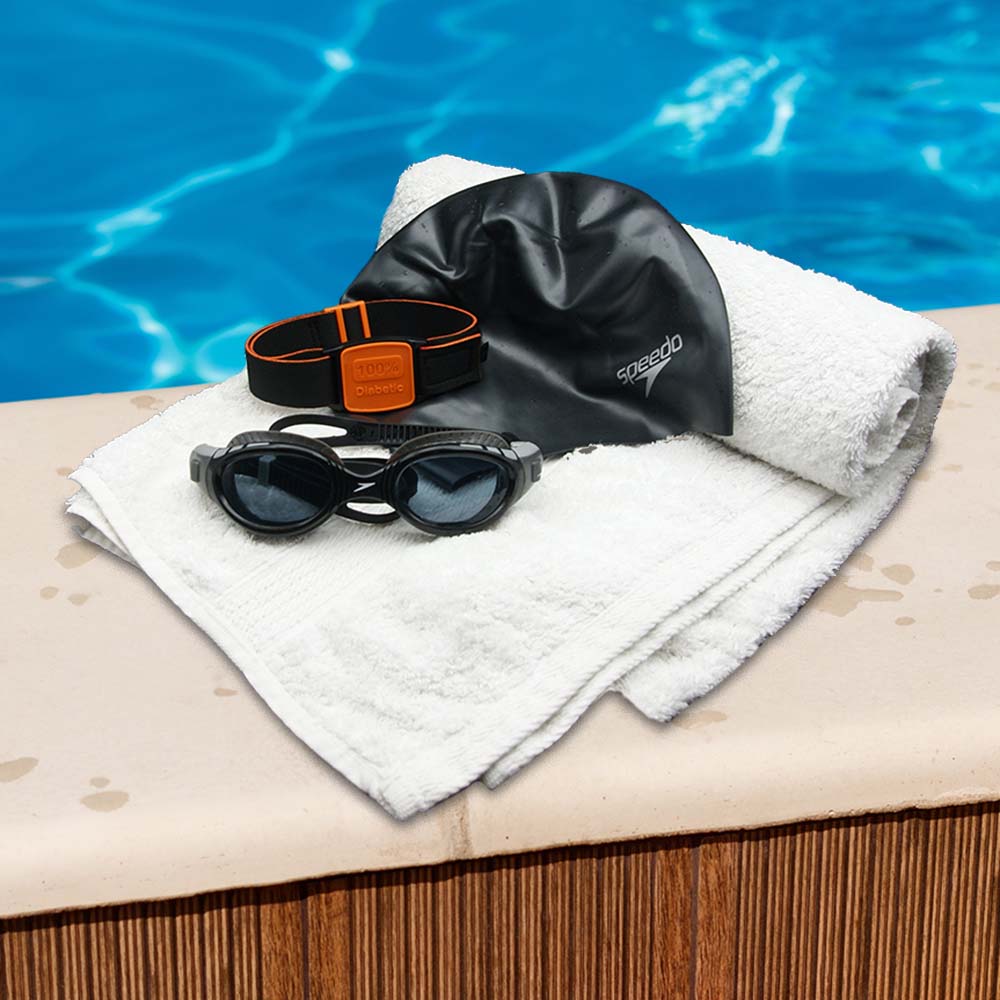
Some people choose to wear a reusable CGM armband during:
- Sport and exercise
- Water activities
- Sleep
- Travel and daily routines
Worn on the upper arm, it sits over the sensor and can help reduce the risk of it being knocked or falling off, without interfering with readings.
Final thoughts
The Dexcom G7 is clearly a step forward in CGM technology.
Real-time data, faster warm-up and hybrid-closed loop integration make it a strong option.
But real-world use matters.
For me, the sensor coming off after 48 hours was significant. It affects confidence in the device.
I also found that real-time data felt less empowering than expected. Instead of choosing when to check, I felt like I was constantly reacting.
That won’t apply to everyone.
But for now, I’m still drawn to the control and flexibility I get from FreeStyle Libre.
FAQ: Dexcom G7 (UK & US)
Is the Dexcom G7 available on the NHS in the UK?
Access to Dexcom G7 on the NHS in England varies by local ICB and clinical pathway. It is available in some areas, particularly where hybrid-closed loop systems are approved, but not yet universally prescribed.
Is Dexcom G7 covered by insurance in the US?
Yes. Dexcom G7 is now widely covered in the US, including Medicare and many private insurers. Coverage depends on your plan, but access has expanded significantly since launch.
How long does the Dexcom G7 sensor last?
Each sensor is worn for up to 10 days, with an additional 12-hour grace period to change the sensor without losing data continuity.
Is Dexcom G7 waterproof? Can you swim with it?
Dexcom G7 has an IP68 rating and can be worn in water, including swimming, showering and bathing. It is tested for up to 24 hours at a depth of 2.4 metres.
In real-world use, the main risk during water activities is the sensor being knocked or coming loose rather than water damage.
Why do Dexcom G7 sensors fall off?
Adhesion can vary depending on skin type, activity level, climate and placement. Knocks from everyday activities, clothing or contact can increase the risk of the sensor coming off.
Does Dexcom replace sensors that fall off?
Dexcom typically offers sensor replacements in many cases, including when sensors fail or come off early. Policies can vary slightly between the UK and US, so it’s best to contact Dexcom support directly.
Does Dexcom G7 work with insulin pumps?
Yes. In the US, Dexcom G7 integrates with systems such as Tandem t:slim X2 and Omnipod 5 as part of hybrid-closed loop systems.
In the UK, integration is expanding but depends on device availability and NHS pathways.
Can you use Dexcom G7 with a smartwatch?
Yes. Dexcom G7 supports direct-to-watch features, including Apple Watch, with ongoing improvements and wider compatibility expected.
How does Dexcom G7 compare to FreeStyle Libre?
Dexcom G7 provides continuous real-time glucose readings and alerts without scanning.
FreeStyle Libre offers optional real-time alerts (Libre 2) or continuous readings (Libre 3), with more detailed reporting in the app.
Choice often depends on preference for alerts, data style and how you manage your glucose day-to-day.
Is Dexcom G7 suitable for sport and everyday use?
Yes, it is designed for everyday wear, including sport and water activities. However, some users choose additional support to reduce the risk of sensors being knocked or falling off during more active situations.
Disclaimer
Details are correct to the best of the author’s knowledge at the time of writing. Information may vary by region and over time. Always check with the manufacturer or your healthcare provider.
Love My Libre is not affiliated with Dexcom or Abbott. This content is not medical advice.




Leave a comment (all fields required). Please note, we are unable to respond to individual comments posted here.